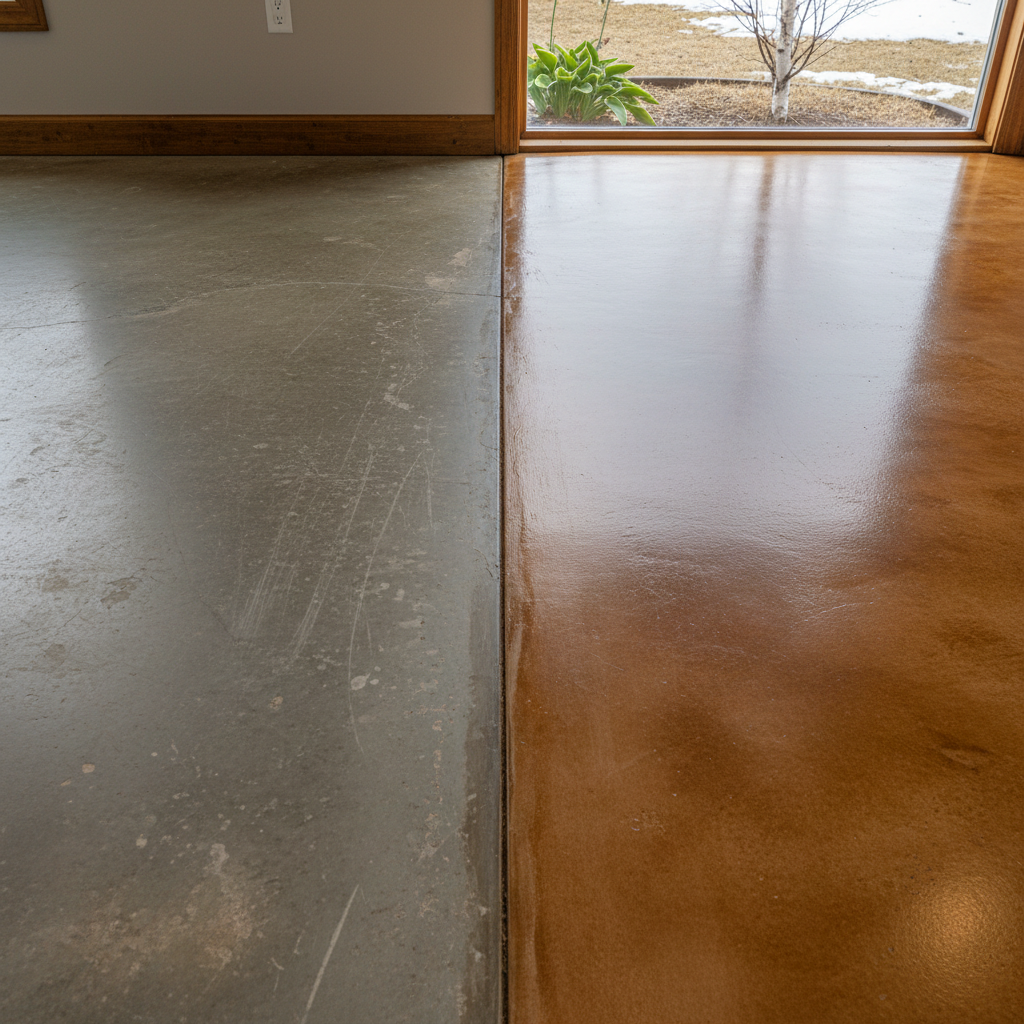
Alright, so you're thinking about sprucing up that old concrete patio, maybe a basement floor, or even a walkway. Staining is a fantastic way to add some character without ripping everything out, you know? But once you start looking into it, you'll quickly discover there are two main kinds of stains: acid-based and water-based. So, which one's the right fit for your place here in Cloquet? Let's chat about it.
Acid-Based Stains: The Reactive Option
Acid stains, sometimes people call them reactive stains, actually work by reacting with the minerals — mostly lime — inside your concrete. It's not just a coating sitting on top; it's a chemical process that changes the concrete's color permanently. Think of it like a translucent wash that just becomes part of the concrete itself.
Appearance
This is where acid stains really get some people excited. They create a mottled, variegated, kind of translucent look. It's earthy, organic, and honestly, no two applications ever turn out exactly the same. You won't get a solid, uniform color. Instead, you'll see variations in tone, which often looks really natural and high-end. The color palette usually sticks to browns, tans, terra cottas, and some blues and greens, all with that signature translucent quality.
Durability & Maintenance
Since the color is baked right into the concrete, acid stains are incredibly durable. They won't chip, peel, or fade like paint or some topical coating might. Once it's sealed properly, it's super tough. Maintenance is pretty simple: just regular cleaning with a neutral cleaner and re-sealing every few years, especially for outdoor areas that have to put up with our harsh Cloquet winters. You'll definitely want a good quality sealer to protect against moisture and wear, by the way.
Cost & Installation
The material cost for acid stains can be a little higher than some water-based options, but not always by a huge amount. The real difference often comes down to the labor. It's a multi-step process: you've got thorough cleaning, applying the stain, neutralizing the acid, rinsing, drying, and then putting on multiple coats of sealer. It takes time, and you need to be precise. If you're tackling it yourself, be ready for some serious elbow grease and careful chemical handling. Professional installation will definitely reflect that complexity.
Water-Based Stains: The Penetrating Pigment
Water-based stains, or non-reactive stains, are a whole different animal. They contain finely ground pigment particles suspended in a water or acrylic base. Instead of reacting with the concrete, these pigments just soak into the surface pores and deposit color. They don't create that same chemical bond you get with acid stains.
Appearance
With water-based stains, you open up a much wider range of colors — we're talking vibrant blues, reds, grays, and even opaque options if you put on enough coats. You can achieve a more uniform color, though some translucency is still common, especially if you apply it lightly. You can also layer colors or use stencils more easily to create custom designs. If you're after a specific, brighter color that acid stains just can't deliver, water-based is probably your best bet.
Durability & Maintenance
Water-based stains are also quite durable, especially when you seal them correctly. They won't chip or peel off the surface like paint would. However, because the color just sits in the pores rather than chemically bonding, they might show wear or fade slightly over a very long time, particularly in high-traffic spots or areas with lots of UV exposure. Maintenance is similar to acid stains: keep it clean and re-seal it when needed. A good sealer is absolutely critical here too, to lock in that color and protect the surface.
Cost & Installation
Material costs for water-based stains can swing quite a bit depending on the brand and quality, but generally, they can be a bit more budget-friendly on the material side. Installation can be simpler too, often needing fewer steps than acid stains. You still need a clean, prepped surface, and sealing is non-negotiable, of course. For a DIYer, water-based stains are usually a bit more forgiving to apply, with less risk of permanent etching if you make a mistake.
Which One For Your Cloquet Home?
Here's the real deal: both are good options, but they really serve different looks and needs.
- For that natural, earthy, one-of-a-kind look: Go with acid stain. If you love the idea of a mottled, stone-like appearance and don't need super bright colors, it's fantastic. It's incredibly durable for our freeze-thaw cycles here in Cloquet, especially if you've got a good, dense concrete slab like many homes in the Blackhoof Valley area.
- For specific colors, uniformity, or custom designs: Water-based is your friend. If you want a vibrant blue around your pool deck or a consistent gray in your basement, water-based gives you that kind of control. It's also a bit more forgiving for a homeowner who's doing it themselves.
From a purely practical standpoint for outdoor applications in our climate, I've seen acid-stained concrete hold up incredibly well over the years, provided it's sealed correctly. The way the color is integrated means it's less prone to UV degradation or surface wear that might affect a less deeply penetrating pigment over decades. But honestly, the biggest factor often comes down to the look you're after, doesn't it?
No matter which you choose, surface prep is absolutely key. You just can't skip cleaning, degreasing, and making sure your concrete is ready to accept the stain. And please, don't skimp on the sealer – that's what protects your investment. Here at Oasis Concrete Coatings, we work with both types, and we can tell you which one will give you the best results for your specific project and vision. Give us a call, we're happy to talk through it.