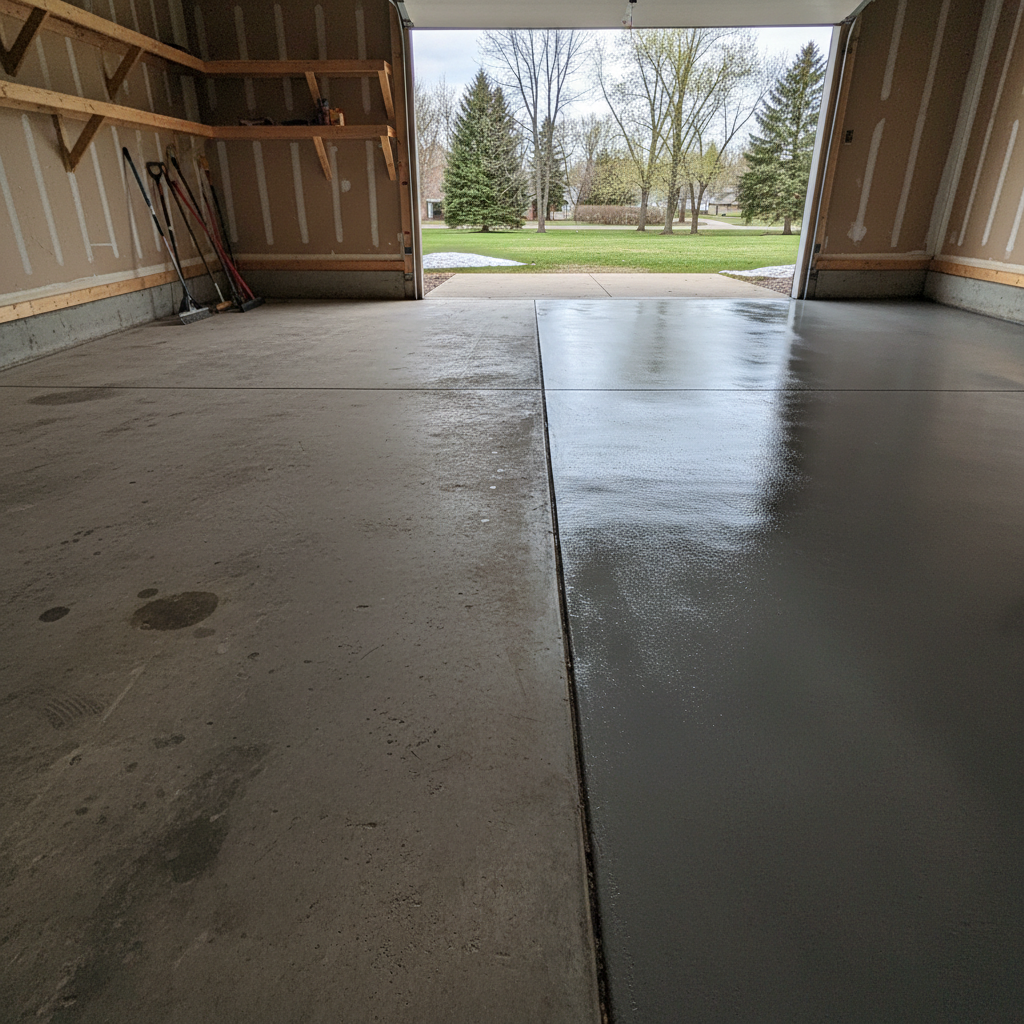
So, you've got concrete around your place, right? Maybe it's a driveway, a patio, or even a basement floor that's seen better days. And you're thinking about sealing it up. That's a smart move, especially with the kind of weather we get here in Cloquet, Minnesota. But when you start looking, you'll quickly find there are two main types of sealers out there: penetrating and topical. What's the real difference between them, and which one's actually right for your home?
Penetrating Sealers: The Invisible Defender
Let's start with penetrating sealers. These guys are made to soak right into the concrete itself, not just sit on top. Think of it like waterproofing a jacket; the repellent gets deep into the fabric fibers. With concrete, these sealers actually react chemically with the material to form a barrier inside its pores. They don't change the look of your concrete at all, which is a big deal for some folks, you know?
Durability & Protection
Because they're inside the concrete, they offer really good protection against water absorption, those brutal freeze-thaw cycles, and de-icing salts – all huge problems here in northern Minnesota. They won't peel or flake off because there's no film to begin with. This makes them incredibly durable, often lasting 5-10 years, sometimes even longer, depending on the product and how much traffic it gets.
Maintenance & Appearance
Maintenance is pretty minimal, honestly. You just clean your concrete like normal. As for appearance, like I said, it stays exactly the same. If you love the natural look of your concrete, this is your go-to. You won't get any sheen or color enhancement from it.
Cost
Upfront, penetrating sealers can sometimes cost a bit more per gallon than some topical options. But their longevity often makes them more cost-effective in the long run. You're not reapplying them every couple of years, which is nice.
Topical Sealers: The Surface Shield
Now, topical sealers are different. These form a protective layer right on top of the concrete surface. They're kind of like a clear coat of paint. You'll often see them in acrylic or epoxy formulations, though at Oasis Concrete Coatings, we mostly deal with polyurea coatings for garage floors because they're far superior to typical topical sealers for that job. For outdoor concrete, though, acrylics are common.
Durability & Protection
Topical sealers do a good job protecting against stains, abrasion, and surface wear. They can also offer some water resistance. But because they sit on the surface, they're more susceptible to wear and tear from traffic, UV exposure, and especially our brutal freeze-thaw cycles. They can crack, peel, or delaminate over time, especially if someone didn't apply them perfectly or if the concrete wasn't prepped right. You see this a lot on driveways in the Fond du Lac neighborhood where folks try to DIY with a cheap acrylic sealer, unfortunately.
Maintenance & Appearance
Maintenance involves regular cleaning, and you'll probably need to reapply them every 1-3 years to keep up the protection and appearance. Appearance-wise, topical sealers usually enhance the concrete, giving it a wet look, a slight sheen, or even a high-gloss finish. Some even have color tints. If you want to change the look of your concrete, this is how you do it.
Cost
Often, topical sealers are cheaper per gallon, which makes them attractive for a quick fix. But remember that reapplication schedule. Those costs add up over time, and the labor involved in stripping old, failing topical sealers before reapplying can be significant.
Which One For Cloquet?
Alright, so which one should you pick for your Cloquet home? For most outdoor concrete – driveways, sidewalks, patios – I almost always lean towards a high-quality penetrating sealer. Our winters are just too tough on surface-level coatings. The constant freezing and thawing, combined with de-icing salts, will break down a topical sealer much faster than it will affect a penetrating one. You want something that's going to stand up to that abuse without needing constant reapplication, right?
If you're looking for a specific aesthetic, like a high-gloss finish or a particular color, then a topical sealer is your only option. But be prepared for more frequent maintenance and potential reapplication. For garage floors, we're talking a whole different ballgame with polyurea systems, which are topical but engineered for extreme durability, far beyond what typical acrylic sealers offer.
Ultimately, it comes down to what you prioritize: long-term, invisible protection with minimal upkeep (that's penetrating) or a specific look with more frequent maintenance (that's topical). For the average Cloquet homeowner just wanting to protect their investment from our harsh climate, a good penetrating sealer is usually the smarter, more durable choice. It's less hassle, and it just works better with what Mother Nature throws at us up here.