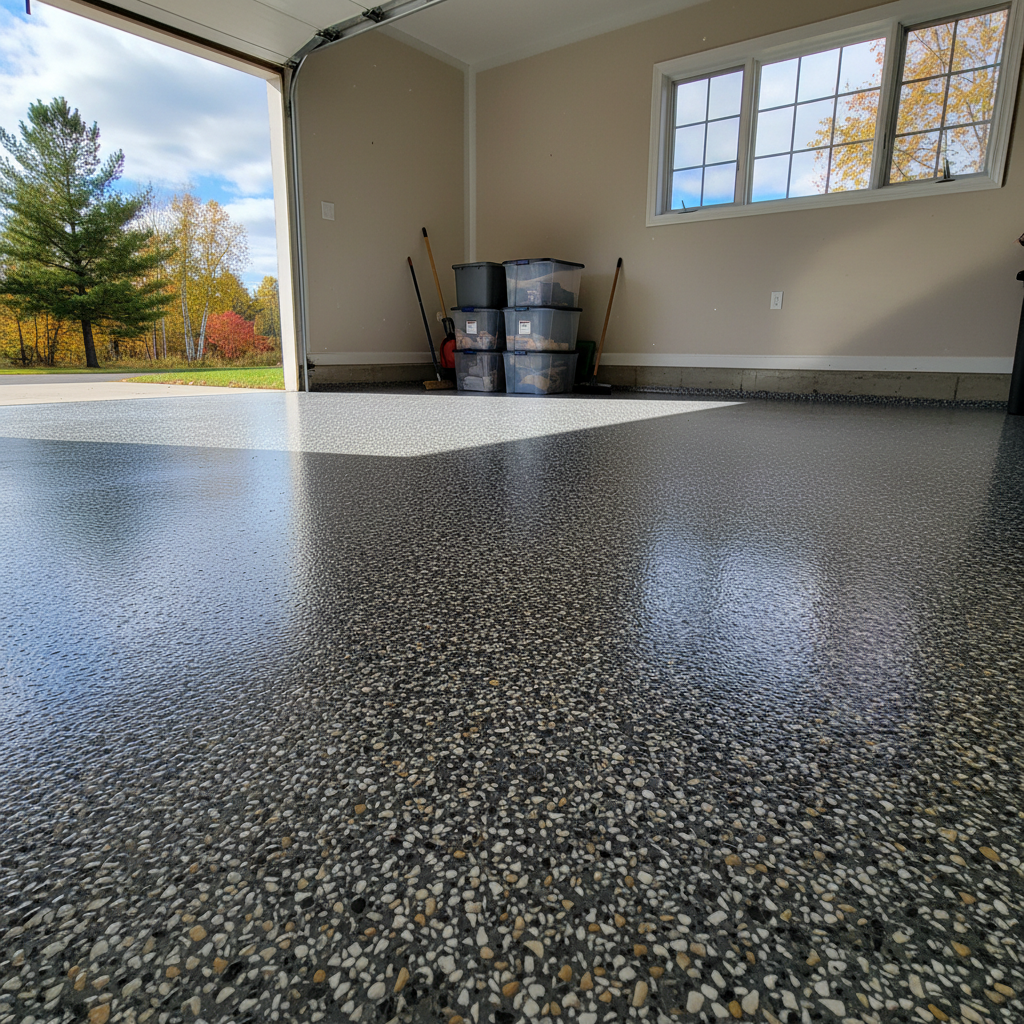
What exactly is an epoxy floor coating, anyway?
Okay, let's clear this up first. When folks talk about an 'epoxy floor,' they're usually referring to a multi-layer system that goes over a concrete slab. It's not just paint, even though some people use those words interchangeably. Real epoxy is a thermosetting polymer, meaning it cures and hardens through a chemical reaction between a resin and a hardener. Once it's cured, it forms a super durable, long-lasting, and often glossy surface that's tough as nails. It bonds directly to the concrete, creating a protective layer that's all one piece. We're talking serious protection against stains, abrasions, and impact — way beyond what regular concrete or paint can offer. That's why it's so popular for garages, basements, and even some commercial spaces around here.
How long does an epoxy floor coating typically last in a place like Cloquet?
That's a great question, and it really depends on a few things: the quality of the product, how well the prep work was done, and, honestly, how much abuse it takes. If you're getting a professional-grade, 100% solids epoxy system installed by someone who knows what they're doing – and that's what we use at Oasis Concrete Coatings – you can expect it to last a good 10 to 20 years, sometimes even longer. I've seen floors that are still looking sharp after two decades, believe it or not. The key is the prep. If the concrete isn't properly cleaned, ground, and repaired before the epoxy goes down, it won't stick right, and you'll run into issues much sooner. Also, heavy vehicle traffic, harsh chemicals, or dragging heavy equipment without protection can shorten its lifespan. But for a typical Cloquet garage, protecting it from our brutal winters and road salt, it's a long-term investment.
Can epoxy coatings handle our harsh Cloquet winters and road salt?
Absolutely, that's one of the biggest reasons homeowners in our area choose epoxy. Our winters are no joke, right? The constant freeze-thaw cycles, the moisture, and especially all that road salt and de-icers we track in can wreak havoc on bare concrete. Epoxy creates a non-porous barrier that seals the concrete completely. This means water, salt, oil, antifreeze – none of it can get in and cause damage. It makes cleanup a breeze too; just sweep away the grit and hose down the salt residue. You won't get the spalling or pitting that you see on untreated garage floors after a few seasons. It's built to stand up to our climate, no problem.
What kind of maintenance does an epoxy floor need? Is it a lot of work?
Maintenance? Honestly, it's probably one of the easiest floors you'll ever own. That's another big selling point for folks. Because it's non-porous and all one piece, dirt, dust, and spills just sit on the surface. You don't have to worry about anything soaking in. For general cleaning, a broom or a dust mop usually does the trick. For spills or heavier dirt, a mild soap and water solution with a soft-bristle brush or mop is all you need. Avoid harsh abrasive cleaners or steel wool pads, as those can dull the finish over time. If you get a really stubborn stain, a little bit of denatured alcohol on a rag can often take care of it. It's way less work than trying to scrub oil stains out of bare concrete, that's for sure.
My concrete floor has cracks and uneven spots. Can epoxy still be applied?
Good question, and the short answer is yes, usually. But here's the important part: those cracks and uneven spots need to be properly addressed *before* the epoxy goes down. We can't just slap epoxy over them and expect it to look good or last. Any existing cracks, divots, or spalling need to be repaired and filled with specialized concrete repair products. For uneven spots, we might need to grind the concrete down to create a level surface or use a self-leveling compound. The goal is to create a smooth, sound base for the epoxy to stick to. If you've got an older home in, say, the Carlton Avenue area where some of those foundations have seen a lot of years and shifting, we'll spend extra time on the prep to make sure the base is perfect. The final look and durability of your epoxy floor are directly tied to how well the concrete was prepped underneath.
How long does the installation process take, and when can I use my new floor?
The total time for an epoxy floor installation can vary, but for a typical residential garage, you're usually looking at a 2 to 3-day process. Day one is almost entirely dedicated to prep work: grinding the concrete, repairing cracks, and cleaning. This is the most crucial step, and we don't rush it. Day two is for applying the base coat and any decorative flakes. Sometimes a third day is needed for a clear topcoat, especially if you're going for maximum durability and UV resistance. After the final coat is applied, you'll need to stay off the floor for a period to allow it to cure. Generally, you can walk on it lightly after 24 hours, but we usually recommend waiting 48-72 hours before parking vehicles on it or placing heavy items. Full chemical cure can take up to 7 days, so it's best to be gentle during that first week. We'll give you specific instructions based on the products we use and the conditions.
Is an epoxy floor slippery, especially when it's wet?
That's a common concern, and it's a valid one, especially with our wet and icy conditions around here. A standard, smooth epoxy finish can be slick when wet, just like any sealed, non-porous surface. However, there are ways to make it much safer. We can incorporate anti-slip additives into the topcoat. These are usually fine aggregates that create a slightly textured surface without being rough or hard to clean. Think of it like a very fine sandpaper texture. It significantly increases the traction, even when the floor is wet or has a bit of snowmelt on it. So, you definitely don't have to worry about turning your garage into an ice rink. Just make sure you discuss anti-slip options with your installer; it's something we always recommend for garages and basements, especially in our climate.