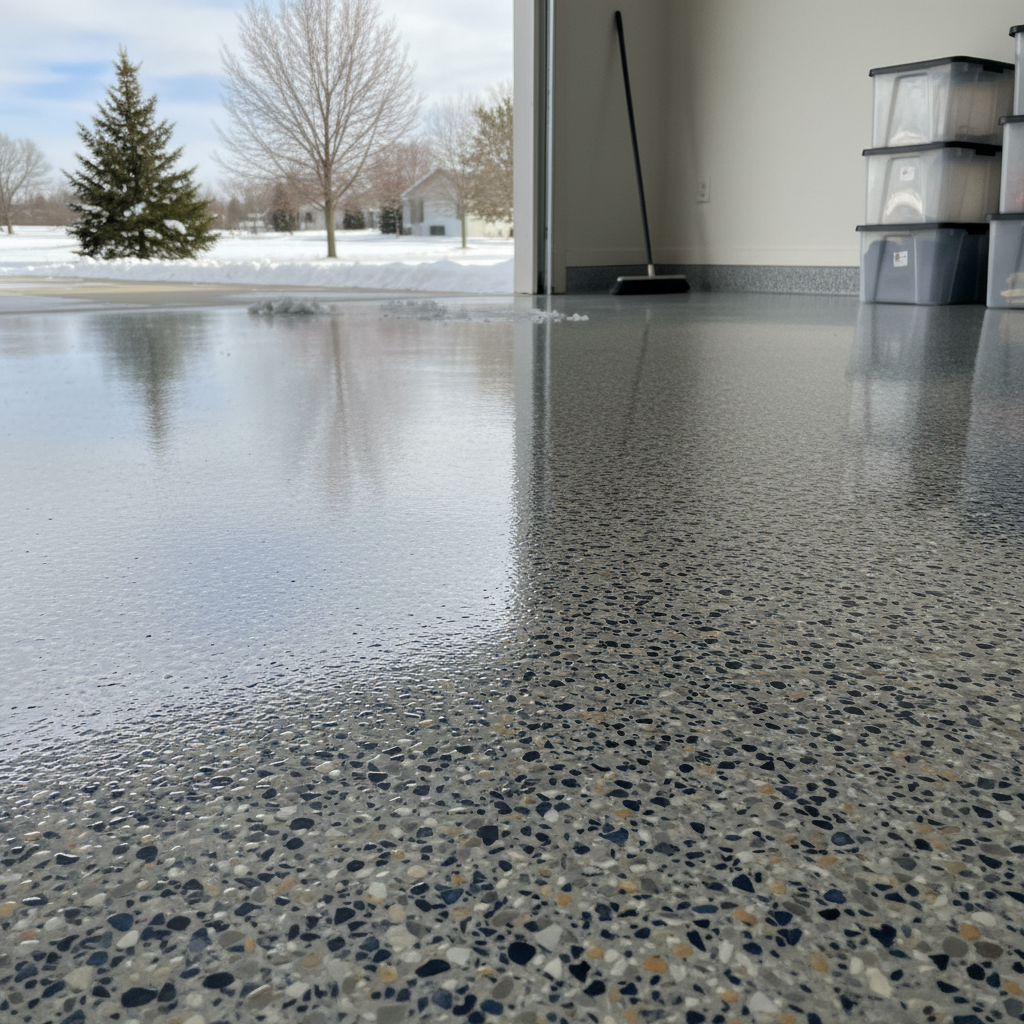
If you live around Carlton County, you already know what winter does to concrete. Between the sub-zero snaps and all the road salt tracked in from Highway 33, your garage floor takes a heavy beating year after year. When homeowners start thinking about cleaning up their space with a new surface upgrade, they usually have a stack of questions that go beyond the basic brochure details. Here is what you need to know before booking a project.
How do winter temperatures affect the installation process?
Cold weather changes everything when you are working with resins and polyureas. Up here in Cloquet, we deal with long stretches where ambient temperatures stay well below freezing, which means you cannot just apply these products whenever you feel like it. Most professional coating materials require specific temperature ranges to cure properly and bond with the concrete slab. If the floor is too cold, the chemical reaction will not happen right, leading to soft spots or total failure down the road. Oasis Concrete Coatings pays close attention to climate control during installation, making sure the concrete reaches the right temperature before laying down any product.
Will road salt and slush ruin a new surface?
Protecting your concrete from salt is one of the main reasons people call Oasis Concrete Coatings in the first place. Raw concrete is porous like a sponge. When you pull your car into the garage dripping with slush mixed with county salt brine, that liquid sinks right into the pores. As it freezes and thaws, it breaks apart the surface and causes pitting. A quality multi-layer coating seals that slab completely tight. Salt sits right on top where you can easily hose or squeegee it away without it ever touching the actual concrete.
Can these systems handle shifting and heavy vehicle weight?
Concrete slabs move. With our deep frost lines in northern Minnesota, the ground beneath your garage experiences heavy freeze-thaw cycles that can cause minor shifting. Old-school paints and cheap DIY kits rigidify and crack the second the slab flexes even a fraction of an inch. Modern polyurea and multi-layer chip systems have enough flexibility to bridge hairline cracks and move naturally with the concrete without tearing or peeling away.
How long does the whole job take from start to finish?
Most residential garage floors take just one day to apply. Oasis Concrete Coatings spends the bulk of the time on proper prep work, including diamond grinding the concrete to open up the pores and repairing any pitting or cracks. Once the base coat, decorative chips, and clear topcoats go down, the floor is usually ready for light foot traffic within 24 hours. You can typically park your vehicles back inside after about 48 hours, depending on humidity and temperature conditions in your garage.
Is DIY floor paint worth the savings?
You can walk into any big box store and grab a single-can epoxy kit for a couple hundred bucks, but you have to look at what you are actually getting. Those DIY kits are usually water-based or low-solids formulas that wear down under hot tires within a couple of seasons. Hot tire pickup is a major problem because the rubber gets warm on the highway, grips the cheap paint, and pulls it right off the floor when you park. Professional-grade polyaspartic and polyurea systems are chemically engineered to resist hot tire peel entirely.
Taking care of your garage floor should not feel like a guessing game. If you want a setup that stands up to northern winters and heavy local use, getting the details right from day one makes all the difference.