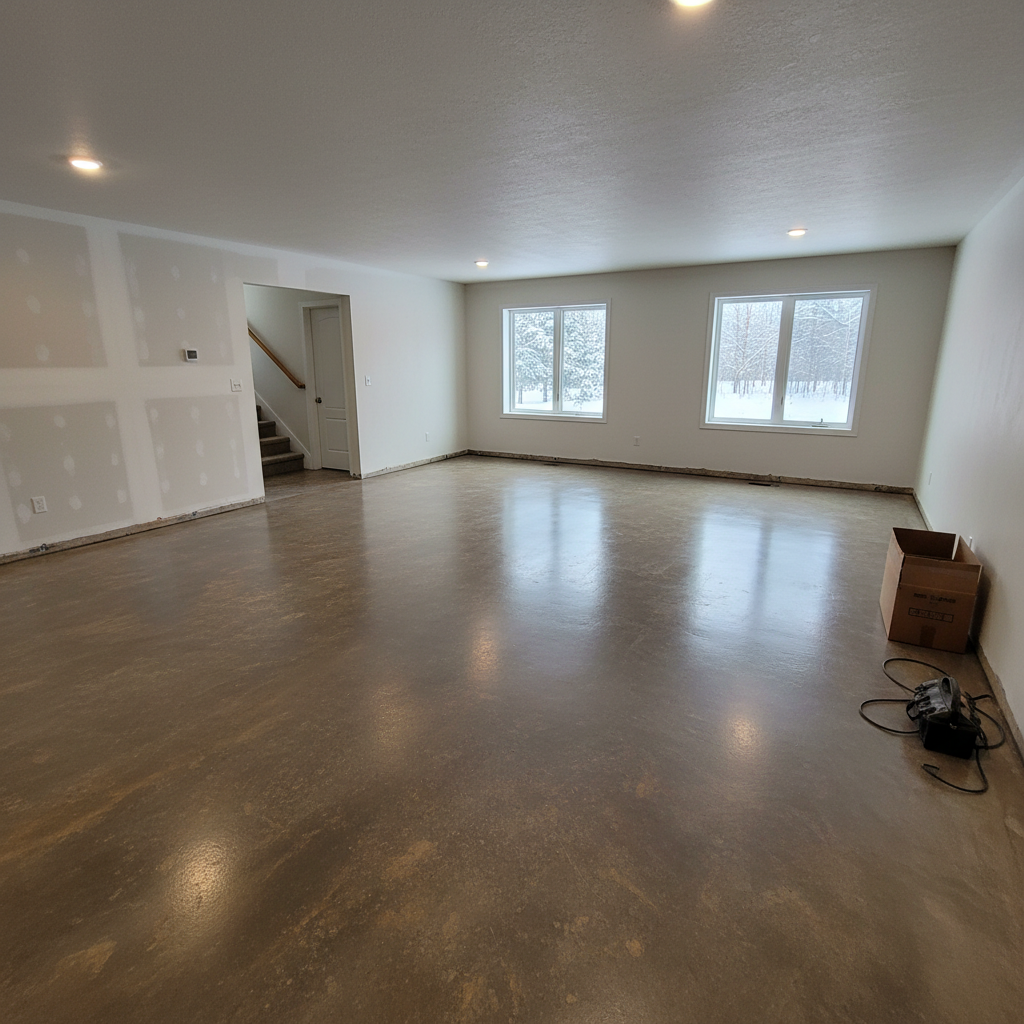
Are you staring at a pitted, stained garage floor or a basement slab that has seen better days? Planning a concrete floor resurfacing project does not have to be a headache. Here in Cloquet, our local weather swings from freezing sub-zero winters to humid summers, which means concrete takes a real beating from thermal expansion and winter deicing salts. If you are ready to fix up your space, you need a solid roadmap before anyone starts grinding away at your slab.
Setting a Realistic Timeline
Most standard residential floor resurfacing jobs take between two to four days from start to finish. The first day is usually dedicated to heavy prep work and mending any troublesome cracks or spalling. Once the base layers and decorative chips go down, the clear protective topcoats need time to cure properly. While you can usually walk on the floor within 24 hours of completion, you will want to wait a few days before parking heavy vehicles or dragging storage cabinets back inside.
What to Expect During the Process
When our crew at Oasis Concrete Coatings shows up, we start with mechanical diamond grinding to open up the concrete pores and clear away old sealers or paint. You can expect some noise and dust, though professional setups use industrial vacuums to keep the mess contained. Next comes meticulous patching. We do not just cover up cracks; we fill them so they will not telegraph back through your new surface. After the repair work, we apply the high-performance base coat, broadcast any chosen color flakes, and lock it all down with a chemical-resistant topcoat.
How to Prepare Your Space
Getting your room or garage ready is mostly on you, but it makes a huge difference in how smoothly things run. You will need to clear everything off the floor completely, including every box, tool, and lawnmower that has to find a temporary home elsewhere. Make sure power outlets in the area are accessible, as our equipment needs juice. If you are doing a garage, plan on parking your vehicles outside for a few days while the materials cure and harden without interference from exhaust or tire plasticizers.
Questions to Ask Before Signing a Contract
Never sign on the dotted line without getting clarity on a few important details. Ask your contractor about their specific moisture-testing procedures, because trapped vapor will cause even the best coatings to bubble and peel over time. Find out what exact products they are using and whether they are rated for local northern conditions. Make sure you also ask for a clear warranty breakdown so you know what is covered if anything goes wrong down the road.